
Langley Park City Directory Collections
A Langley Park city directory search works best when a postal label and time period are matched to the person or address being traced. Langley Park is unincorporated. Its older names often sit inside county volumes or titles from nearby postal cities rather than one tidy local run. That shapes every resident lookup here. Library databases, reading-room shelves, newspapers, maps, and census schedules can turn a two-line listing into a dated family trail. Want to find who lives on a street in Langley Park? Or track past residents of the community? Treat each printed entry as a snapshot. Check name variants, and record which volume supplied every detail.
| Collection | Years | Where Held | Access |
|---|---|---|---|
| Polk’s Laurel, Prince George’s County City Directory | 1962 | Maryland State Archives, Mezzanine 10-3-2 | Physical reading-room source |
| HeritageQuest city directories | Individual title and year runs unstated | PGCMLS Discovery Suite | Library card and PIN for licensed remote collection |
| Ancestry Library Edition | Exact local directory run unstated | PGCMLS branches | Branch computer or service only |
| Prince George’s Room newspapers, maps, and microfilm | Exact reel years not published | Hyattsville Branch | On-site reader, staff request, or consultation |
| DeMarr Library of County History | County holdings; directory inventory unstated | Prince George’s County Historical Society | Contact the library for access and catalog help |
These limits are research facts in themselves. A missing Langley Park title never proves a household was absent. It means the resident lookup should branch toward county rolls, a neighboring postal city, telephone or reverse directories, and newspaper evidence rather than an invented year no catalog supports.
Langley Park City Directory: 1962 Polk
The most specific named holding is the Maryland State Archives record for Polk’s Laurel, Prince George’s County, Maryland City Directory, 1962. The guide names R.L. Polk & Co. of Richmond, Virginia, and places the volume at Mezzanine 10-3-2. Treat it as a Laurel and county-context source. The catalog does not prove the book is a Langley Park-only directory. So read the title page, geographic scope, and index before counting an address as covered. The Maryland State Archives directory holdings screen lists the state’s directory collections. It also shows where each volume sits.
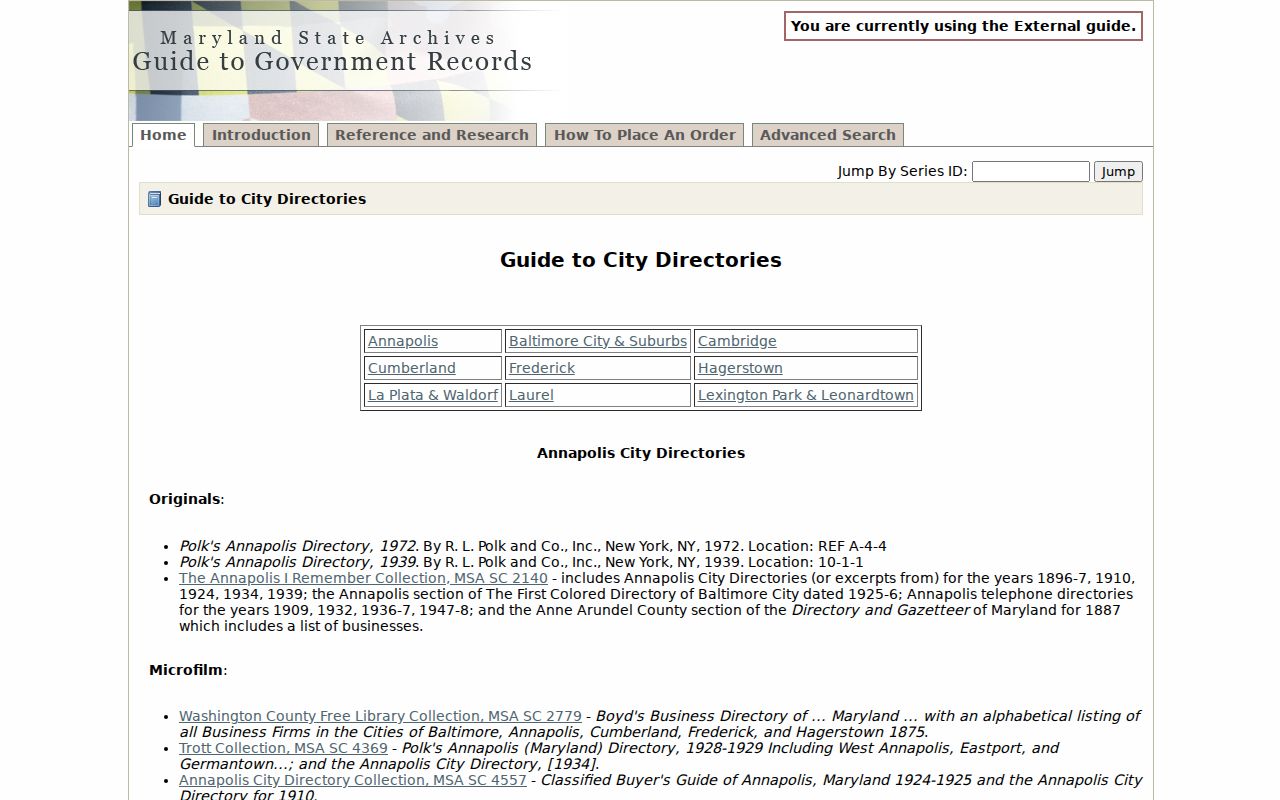
Use the holding record to request the correct volume, then keep its title and date beside every transcription. The catalog lists no open Langley Park entry scan. Assume no sample entry or abbreviation key until the volume itself is in hand.
Langley Park Directory Labels Beyond Town
Directory searching in Langley Park is a records-geography task. The community is a Census-designated place and unincorporated. It sits in Prince George's County near the Montgomery County line. A directory may print a neighboring postal label. That can happen even when the resident called the address Langley Park. Search the surname and full street in each plausible title. Then compare the printed street against the parcel record, a map, or a later document.
Try English and Spanish name variants, compound surnames, initials, and alternate street forms. Do this when the period and family history support them. Never turn a partial name match into a household match. Apartment and multifamily addresses may list only a principal occupant. An omission can reflect the publisher's practice rather than a move.
Note: No official source publishes a dedicated Langley Park directory run, reverse-directory year list, or local entry scan.
Reading a Langley Park City Directory Entry
Entry fields must be read from the volume you select. Do not fill them in from a generic model. No scanned Prince George's County or Langley Park entry appears in the accessible official material. Details like abbreviations and street ordering vary by title and publisher. Before interpreting marks, initials, or a street-order section, copy the page number. Photograph the title page and any key.
| Name form | Surname, given name, initials, or another printed name form may appear. |
|---|---|
| Address line | A street number and street can appear, but confirm whether it is a home, business, or other listed address. |
| Family notation | A spouse or widow notation may appear if the selected volume uses one. |
| Business detail | A calling, business, or organization detail may appear only when the selected volume prints it. |
| Ownership notation | Owner-related marks are volume-specific and should be decoded only from that volume’s key. |
- Criss-cross directory
- A reverse, street-order directory that can connect an address to the listed occupant.
- Householder index
- An index organized around the person treated by that volume as the household listing, not a full roster of everyone present.
- Abbreviation key
- The volume’s own explanation of shorthand. Find and preserve it before expanding a mark in your notes.
City directory evidence is strongest when name, street, year, and volume all agree. It is not a current-residence record. Read the page as printed, and do not infer facts the chosen volume never states.
Langley Park City Directory Access
The Prince George’s Room at the Hyattsville Branch is the practical in-person fallback. It matters when a title is not online. Its noncirculating local-history collection includes a microfilm and microfiche reader, local newspapers, Sanborn maps, historical county court material, assessment books, and consultations. Consultations with staff round out the holdings. Hours mix weekdays and weekends. Ask staff for a particular reel or reverse-directory title. The collection page publishes no exhaustive directory list, so ask directly. The Prince George’s Room collection page describes this local-history access point and what it holds.

Bring the street address, name variants, postal labels, and date range to the visit. If a directory is missing, the same trip can pivot to newspapers, assessment books, maps, and county reference works. An online gap is never the end of the trail.
Langley Park City Directories Online
The PGCMLS Discovery Suite describes HeritageQuest as a licensed family-history collection holding city directories, census data, schedules, and genealogical material. Access requires a library card and PIN. The landing page does not state the exact nearby titles or year runs, so record every result by collection title and year rather than calling it a complete Langley Park set. Ancestry Library Edition is offered too, but access is branch-only. The Discovery Suite page lays out both access paths and their requirements.
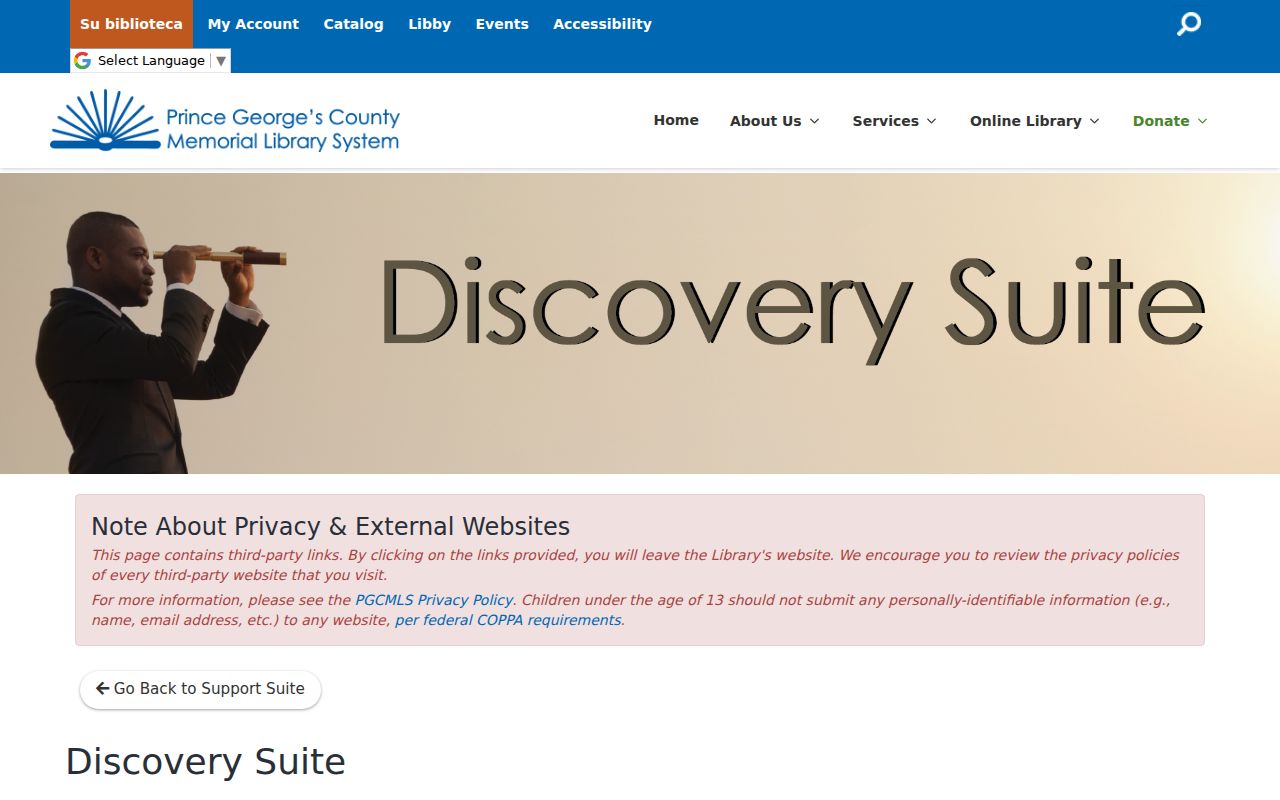
Search the database first with a surname and the known postal city, then visit the branch when a branch-only collection fits better. A result is a lead, not a substitute. Save the citation, image, and visible page context every time.
Langley Park City Directory Companions
The Prince George's County Historical Society maintains the DeMarr Library of County History, a county-level archive of books, manuscripts, periodicals, photographs, and other local-history material. Its public description lists no Langley Park directory title. That leaves a gap worth closing firsthand. A catalog search or a phone inquiry settles whether a street directory volume sits on its shelves. Claiming a title no public inventory supports would only mislead a residents directory search.
The library's holdings page introduces the county-history collection.

A historical society works best on the leads a printed directory leaves unresolved. Bring it a Langley Park family or property question. The strongest request names the person, a possible postal label, the street, the date range, and whether a photograph, newspaper, or manuscript would also help.
Tracing Langley Park City Directories
A household trail works best as a series of dated checks. Each directory fixes a printed name and address near its publication date. The census gives a different kind of snapshot. Keep the two records distinct. Never force both onto the same day. The 72-year rule leaves 1950 as the newest federal census open to the public.
- Normalize the name, current or historical street form, postal label, and county before opening a volume.
- Find the first confirmed directory appearance and record its title, year, page, and every visible spelling.
- Follow the entry forward and backward through available titles, noting an address change or an unexplained absence.
- Check a reverse or criss-cross section when the selected volume has one, then compare nearby numbers without assuming every resident is listed.
- Pair the directory year with the nearest census and use newspapers, deeds, probate, or court material to test a move, death, or family connection.
A name can vanish for many reasons. It may signal a move or a death. It may also be a changed spelling, a different directory title, or a simple editorial omission. Microfilm of the Prince George's Post and Sentinel offers a way to test each possibility. An obituary or sale notice may settle it. A school mention, community item, or address reference can do the same work.
Langley Park’s Postwar Paper Trail
Langley Park's growth reshaped its directories. Planning material describes the 540-acre McCormick-Goodhart estate of the 1920s. Postwar subdivisions then rose from that former farmland in the late 1940s. Later African-American, Caribbean, and Hispanic migration waves followed. Those waves made the community multilingual. They also explain why name variants, community newspapers, schools, and faith organizations matter so much beside any single city directory entry. Census comparisons help close the circle.
Resist turning the community story into a personal conclusion. Use it instead to choose the next collection. It also helps you preserve the exact evidence that ties a person or family to one address on one date.
Note: A printed directory often lists only the principal occupant. A census or newspaper may describe the wider household at the same address.
Langley Park Historic House Images
The Prince George's Room holds 169 digitized photographs of historic houses. All sit in the county collection. A photograph can tie a building, a former owner, a community story, or an older landscape to a directory search. It cannot name every resident who passed through. Pair the image title or location with a map year, a directory citation, and the matching deed or assessment reference.
Street numbers alone can turn uncertain. Sanborn maps, assessment books, land plats, county planning maps, and digitized photographs then give an address its time frame. The map year and sheet belong in the note. Keep that detail beside the city directory citation. A building lead deserves the same care. Preserve the photograph's caption, collection name, and location wording before comparing it with a dated address record.